
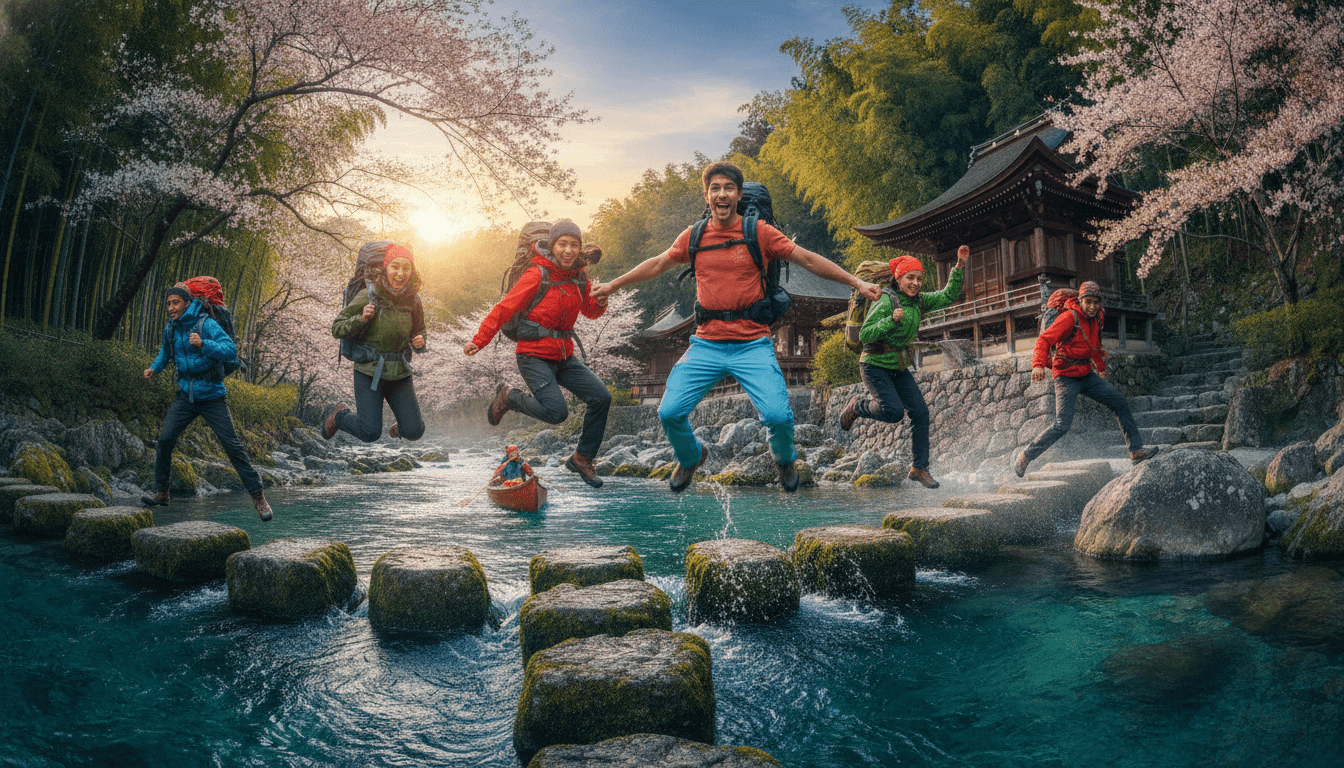
Timeless Japan — Self-Launched Version
10 days · Japan
Cosmos charges £2,000
No-markup version: ~£1,000 per person
Estimate only, not a guaranteed price. Always verify costs independently before booking.
A 10-day independent Tokyo-to-Osaka run that covers the same headline sights as Cosmos's coach tour — Meiji Shrine, Fuji views from Kawaguchiko, Fushimi Inari and Gion in Kyoto, Hiroshima and Miyajima, Himeji Castle and a Bizen pottery stop, then Osaka — but using hostels and budget hotels, public buses and trains, and a 7-day Japan Rail Pass or point-to-point tickets instead of a 50-seat coach. Everything on the original itinerary is self-bookable: shrine visits are free or a few hundred yen, the Samurai & Ninja Museum and Bizen pottery workshop can be booked directly, and okonomiyaki in Dotonbori is dinner rather than a set menu. Costs are backpacker/mid-budget estimates in GBP and exclude international flights.
Day-by-day
Arrive Tokyo — settle into Asakusa
Tokyo
Land at Narita or Haneda and take the Keisei Skyliner (~£12, 45 min from Narita) or the Keikyu line (~£3, 30 min from Haneda) to Asakusa, which puts you next to the temple and has the best-value hostels in the city. Check into a hostel dorm or a private room in a budget business hotel. Use the evening to get a Suica/Pasmo IC card at any station machine (¥500 deposit, top up ~¥3,000) and eat cheap at a standing soba counter or a konbini. Get an early night — you'll be walking a lot tomorrow.
🚌Keisei Skyliner or Keikyu Airport Line from the airport, plus IC card
🛏Asakusa hostel dorm or budget business hotel (APA/ Toyoko Inn-style), ~£18–25
- →Buy Suica/Pasmo IC card
- →Evening wander around Senso-ji's illuminated grounds
- →Konbini or standing soba dinner
Tokyo highlights — Meiji, Shinjuku Gyoen, Asakusa
Tokyo
Do the Cosmо�'s Day 2 on foot and by metro. Start early with Meiji Jingu in Harajuku (free, 6am–sunset) — a forest shrine steps from the JR line; access is from Harajuku or Meiji-jingumae station. Walk to Shinjuku Gyoen (¥500 entry; closed Mondays) for the garden the original tour visits, then take the JR Yamanote or metro to Asakusa for Senso-ji and the Nakamise shopping arcade — free, and best before 9am or after 5pm when tour groups thin out. If you want commentary, a GetYourGuide Tokyo walking tour covering Meiji Jingu + Asakusa runs ~£25–35, but it's entirely optional.
🚌Tokyo Metro / JR Yamanote with IC card, ~£4–6 for the day
🛏Asakusa hostel dorm or budget business hotel, ~£18–25
- →Meiji Jingu shrine (free)
- →Shinjuku Gyoen garden (¥500)
- →Senso-ji and Nakamise arcade, Asakusa
Mount Fuji and Lake Kawaguchiko day trip
Kawaguchiko / Mount Fuji area
The original sleeps near Fuji; a day trip is cheaper and just as effective. Take the JR Chuo line to Otsuki then the Fujikyu Railway to Kawaguchiko (~£22–28 total, ~2.5 hrs), or the direct Fuji Excursion limited express. From the station take the Omni Bus Red Line to the Kawaguchiko Ropeway (~£5 return) for the Fuji panorama, then the Blue/ Omni bus to Chureito Pagoda in Arakurayama Sengen Park — 398 steps, free, and the classic five-storey pagoda-with-Fuji shot. Book a night bus or return to Tokyo in the evening. Weather-dependent: check the visibility forecast the night before.
🚌JR Chuo Line + Fujikyu Railway return, ~£45–55; local Omni buses ~£8
🛏Return to Tokyo hostel, ~£18–25 (or a Kawaguchiko hostel dorm ~£22 if you prefer to stay out)
- →Kawaguchiko Ropeway
- →Chureito Pagoda and Arakurayama Sengen Park
- →Lake Kawaguchiko shoreline walk
Bullet train to Kyoto — Fushimi Inari and Gion
Kyoto
Take the Shinkansen from Tokyo to Kyoto (~2h15, ¥14,170/~£75). If you're doing more long trains this week, a 7-day Japan Rail Pass (~£210 standard) covers the Fuji area, Kyoto–Hiroshima and Hiroshima–Osaka and pays off if you add a couple of day trips; otherwise buy point-to-point. Drop bags at the hostel in Kyoto Station or Kawaramachi. Afternoon: Sanjusangendo (¥600, 1,001 statues) and Fushimi Inari Taisha (free, open 24h — go late afternoon or at dusk to dodge crowds). Evening: a self-guided walk through Gion's Hanamikoji and Shirakawa lanes, with a matcha or warabi-mochi stop. Optional: upgrade to a ryokan night (~£70–110 pp with dinner) if you want the original's optional experience.
🚌Shinkansen Tokyo–Kyoto ~£75; Kyoto city buses/subway ~£5
🛏Kyoto hostel dorm near Kyoto Station or Kawaramachi, ~£20–28 (ryokan optional +£70–110)
- →Sanjusangendo temple
- →Fushimi Inari Taisha
- →Self-guided Gion walk
- →Japanese sweets tasting
Kyoto — Kinkakuji, Nishiki Market, Samurai & Ninja Museum
Kyoto
Bus to Kinkakuji (¥500, opens 9am — arrive at opening) via the #205 bus from Kyoto Station. Then head to Nishiki Market for lunch: free to walk, ~£8–12 of skewers, tamagoyaki and soy-milk doughnuts. Book the Samurai & Ninja Museum Kyoto directly online (~£20–25) rather than through a tour — it includes the guided talk and the helmet-and-armour photo the original advertises. Finish with a walk along the Kamo River or a soak at a sento (¥500).
🚌Kyoto city bus day pass ¥700 (~£4)
🛏Kyoto hostel dorm, ~£20–28
- →Kinkakuji Golden Pavilion
- →Nishiki Market food crawl
- →Samurai & Ninja Museum (booked direct)
- →Sento bath
Kyoto to Hiroshima via Kurashiki
Kurashiki / Hiroshima
Take the Shinkansen to Okayama (~1h, ¥6,000) and a local train 15 minutes to Kurashiki (¥340). Walk the willow-lined Bikan Historical Quarter and visit Koraku-en garden (¥450) — the original's stops, done independently and with far more time. Continue by Shinkansen Okayama–Hiroshima (~40 min, ¥6,000). Stay near Hiroshima Station or in the Peace Park area. Dinner: Hiroshima-style okonomiyaki at a counter in Okonomi-mura (~£7).
🚌Shinkansen + local train, ~£60–70 total
🛏Hiroshima hostel or budget hotel near the station, ~£20–30
- →Kurashiki Bikan Historical Quarter
- →Koraku-en garden
- →Okonomi-mura okonomiyaki
Hiroshima Peace Park and Miyajima
Hiroshima / Miyajima
Morning at Peace Memorial Park: Atomic Bomb Dome (free), Peace Memorial Museum (¥200) and the Memorial Hall — allow 2–3 hours; audio guide ~£3. After lunch take the JR Sanyo line to Miyajimaguchi (~25 min, covered by JR Pass) and the JR ferry to Miyajima (¥200 or free with the pass). Itsukushima Shrine is ¥300; check tide tables to catch the torii 'floating' at high tide. Walk up to Daisho-in temple, then back to Hiroshima for the evening.
🚌JR Sanyo line + JR ferry ~£6 (free with JR Pass)
🛏Hiroshima hostel or budget hotel, ~£20–30
- →Peace Memorial Museum and Atomic Bomb Dome
- →Itsukushima Shrine and floating torii
- →Daisho-in temple
Bizen pottery and Himeji Castle en route to Osaka
Bizen / Himeji / Osaka
Stop first at Imbe on the Ako line (change at Okayama; ~10 min from JR Imbe station) for Bizen-yaki — the town is lined with kilns, and workshops such as the Bizen Pottery Traditional and Applied Arts Hall or local studios offer short throwing/hand-building sessions for ~£20–35 booked by email or on arrival. Then Shinkansen to Himeji and walk 15 minutes (or bus) to Himeji Castle (¥1,000, closed late Dec). Continue by Shinkansen or JR Special Rapid to Osaka (~1h) and check into a hostel in Namba or Shinsekai.
🚌JR/Shinkansen Bizen → Himeji → Osaka, ~£35–45 (JR Pass covers)
🛏Osaka hostel in Namba/Shinsekai, ~£20–28
- →Bizen-yaki pottery town and workshop session
- →Himeji Castle
Osaka — farm houses, castle and Dotonbori
Osaka
Morning: Open-Air Museum of Old Japanese Farm Houses in Ryokuchi Park (¥500, 15 min from Ryokuchi-koen station) — a quiet, excellent folk-architecture collection. Then Osaka Castle (¥600, or free in the surrounding park) via the Tanimachi line. Afternoon/evening: walk Minami — Shinsaibashi-suji, Namba and Dotonbori — and cook-your-own okonomiyaki at a Dotonbori counter or a ¥1,000-ish lunch set (~£8). Consider the Osaka Amazing Pass (¥3,300) if you're doing several paid sights. Optional nightcap: Ura-Namba izakaya crawl.
🚌Osaka Metro day pass ¥820 (~£4.50)
🛏Osaka hostel in Namba/Shinsekai, ~£20–28
- →Open-Air Museum of Old Japanese Farm Houses
- →Osaka Castle
- →Dotonbori / Shinsaibashi / Namba walk
- →Okonomiyaki meal
Osaka departure
Osaka
Final morning: a coffee in Nakazakicho's old-town lanes or one last Dotonbori breakfast, then transfer out. Nankai Rapi:t to Kansai Airport (~£9, 40 min) or the cheaper Nankai Airport Express (~£6). If you're flying from Tokyo instead, the Shinkansen back is ~£85 — but it's far cheaper to book an open-jaw flight into Tokyo and out of Osaka.
🚌Nankai Rapi:t or Airport Express to KIX, ~£6–9
🛏—
- →Nakazakicho wander
- →Airport transfer
Self-launched vs. Cosmos
| This itinerary (self-launched) | Cosmos | |
|---|---|---|
| Price per person | ~£1,000 | £2,000 |
| Duration | 10 days | 10 days |
| Who books it | You and your group, direct | Tour operator, guided group |
| Savings | £1,000 per person (50%) | |
Estimate only, not a guaranteed price. Always verify costs independently before booking.
Want to see more Cosmos-style trips? Check them out here.~£1,000
estimated per person
You never pay Travel Crew for this — you pay hostels, transport, and activity providers directly, the same as if you'd booked it all yourself.
This publishes your dates so other travellers can find and join you — no tour operator needed.
Customise with Tour BusterCreated by

Travel Crew
0 trips
Frequently asked questions
How much does Timeless Japan — Self-Launched Version cost?+
Doing it yourself with this self-launched itinerary costs an estimated £1,000 per person for 10 days in Japan. This is an AI-generated estimate based on typical budget-traveller prices — actual costs will vary by season and how you book.
Is this cheaper than booking with Cosmos?+
Yes — Cosmos charges around £2,000 per person for a similar tour. Doing the same route independently, using the same standard of accommodation and activities, costs an estimated £1,000 — a saving of roughly £1,000 (50%) per person.
How long is the Japan trip?+
This itinerary runs 10 days, covering 10 day-by-day stops through Japan.
How do I join this trip?+
You can join an existing open departure using this itinerary if one is scheduled, or launch your own departure with your own dates and invite other travellers to join you — no tour operator required.
Isn't it easier to just use a tour operator?+
Well, yes, a tour operator will book all the individual parts of your travel for you and provide a guide. That's obvious, but doing this has the potential to save the group thousands, which can in turn improve your itinerary substantially or save you huge amounts of money. Also, when you launch a departure, Travel Crew has tools in place to help you book the individual sections of the trip or make it easier for you to do this as a group. Really, you do not need a middle man. If you are more comfortable paying more and using a middle man, then you should certainly do this.
Is it safer to book through a tour operator?+
Arguably, there isn't much difference. A self-launched trip runs on the same principle as a group travel crew: collective responsibility, everyone looking out for each other, the same way it would if a group of friends organised the trip themselves — because that's exactly what's happening. You should always take out travel insurance before you go, self-launched or not; that doesn't change either way. Every open departure is published publicly with real dates and a real trip organiser, so it's never an anonymous arrangement, and our support team is reachable any time you need help, including in an emergency while you're away. Longer-term, we're building direct relationships with ground DMCs in popular destinations, offered as an optional paid add-on for extra on-the-ground support. Ultimately, though, the group is responsible for its own conduct and safety on a self-launched trip, same as on any trip you plan yourself.
What kind of trip is this?+
This is a culture, city-breaks, foodie trip through Japan, self-launched rather than run by a tour operator — you organise it with a group you find or bring yourself.
Would you like to name the operator, name the trip, or have any suggestions about how to improve this itinerary?
Drop your comment below — if you've done a similar route, tell us what worked, what you'd add, or what you'd skip.
No comments yet — be the first to share your take.
Sign in to leave a comment.