
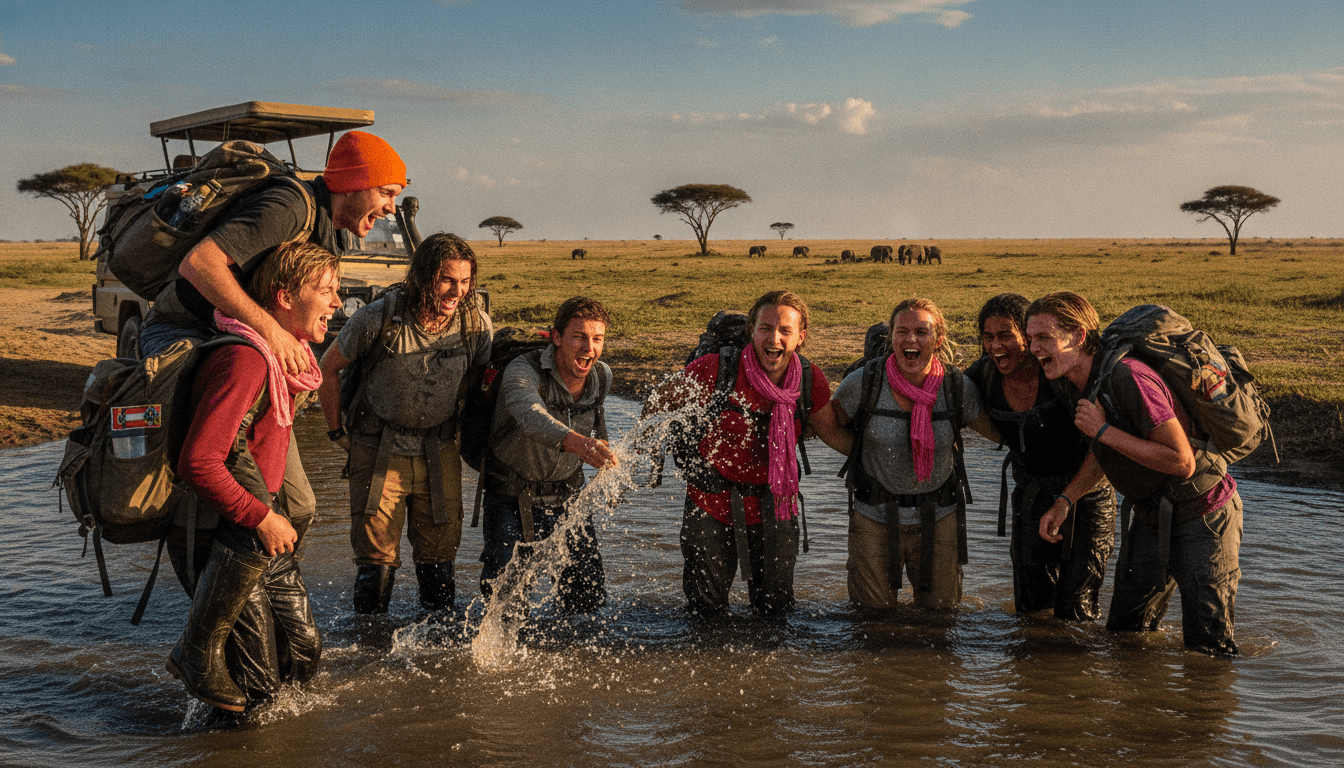
Self-Launched Tanzania Big 5 Safari Circuit — Arusha, Tarangire, Ngorongoro, Serengeti & Lake Natron
10 days · Northern Tanzania
Jeep Safaris and Tours charges £3,650
No-markup version: ~£1,315 per person
Estimate only, not a guaranteed price. Always verify costs independently before booking.
A self-launched version of Jeep Safaris and Tours' 10-day "Big 5 Luxury" camping safari, using the same northern circuit loop — Arusha NP, Tarangire, Lake Manyara, Lake Eyasi, Ngorongoro, Empakai Crater, Serengeti and Lake Natron with the Ol Doinyo Lengai night climb — on public transport, shared shuttles and locally arranged day trips. Instead of a private guided jeep for the whole trip, you base yourself in Arusha and Karatu/Mto wa Mbu, join small-group or shared day-tour safaris, and use the public shuttle network (Arusha–Karatu–Serengeti gate, Arusha–Mto wa Mbu–Lake Natron) to move between parks. Costs are backpacker/budget estimates: camping or basic guesthouses, self-catered or local food, and park fees paid at the gate or through a local booking agent. Note that Tanzania's park fees and crater/Ngorongoro conservation fees are fixed state charges and are the single biggest line item — booking a shared scheduled safari for the Serengeti/Ngorongoro blocks rather than a fully private jeep is where the real savings come from, plus DIY transport and accommodation.
Day-by-day
Arrive Arusha — Arusha National Park day trip
Arusha
Land at Kilimanjaro (JRO) or Arusha airport and take a local shuttle or dala-dala into Arusha town (JRO–Arusha shared shuttle roughly £8–12, ~1.5 hrs). Drop bags at a hostel in the Njiro or city centre area. In the afternoon, book a shared day safari into Arusha National Park through your hostel or a local operator on the spot (entry gate is only ~40 min away) — a half-day shared game drive and canoe trip on Momella Lakes costs roughly £70–90 per person including park fees. Look for colobus monkeys, giraffe, buffalo and flamingos; the Ngurdoto Crater viewpoint is on the way out. Eat dinner at a local 'hoteli' in town for £3–5.
🚌Airport shuttle JRO–Arusha ~£8–12; shared day-safari jeep to Arusha NP and back
🛏Hostel or budget guesthouse in Arusha, dorm or twin (~£12–18)
- →Arusha National Park shared game drive
- →Momella Lakes canoe trip
- →Ngurdoto Crater viewpoint
Arusha → Tarangire National Park
Tarangire National Park
Leave Arusha early via a shared safari jeep or matatu to Tarangire gate (~2 hrs). The cheapest reliable approach is to join a one-day shared Tarangire safari departing Arusha — most Arusha hostels and tour desks sell these for £110–140 pp including park fees, jeep, driver-guide and picnic lunch. Spend the day on game drives along the Tarangire River looking for elephant herds, baobabs, lion and the park's huge buffalo concentrations. Return to Arusha or, if your company allows, get dropped at Mto wa Mbu/Karatu (ask when booking and expect a small supplement) to cut tomorrow's travel.
🚌Shared safari jeep Arusha–Tarangire–Arusha ~2 hrs each way; or matatu Arusha–Mto wa Mbu ~£2
🛏Back in Arusha hostel or Karatu/Mto wa Mbu guesthouse (~£12–20)
- →Full-day shared Tarangire game drive
- →Tarangire River picnic lunch
Mto wa Mbu base → Lake Manyara National Park
Lake Manyara / Mto wa Mbu
Take a matatu or shared shuttle from Arusha to Mto wa Mbu (~2 hrs, £2–3), a busy market town right at the gate to Lake Manyara. Check into a guesthouse and arrange a shared afternoon game drive into Lake Manyara NP through your host or the town's tour desks (~£80–100 pp with park fees). The park is compact, lush and famous for tree-climbing lions, flamingos along the lake shore, and huge baboon troops. Alternatively, do a self-guided cycle or walk around the Mto wa Mbu rice paddies and banana plantations (£3–5 bike hire) and save the park for a full half-day tomorrow.
🚌Matatu/shared shuttle Arusha–Mto wa Mbu ~£2–3; shared jeep to Lake Manyara gate
🛏Guesthouse in Mto wa Mbu, twin room (~£12–20)
- →Lake Manyara shared game drive
- →Mto wa Mbu market and plantation walk
Lake Eyasi — Hadzabe and Datoga communities
Lake Eyasi
Arrange a shared day trip to Lake Eyasi through your Mto wa Mbu guesthouse the evening before (the road is rough, so a 4x4 with a driver is essential; typically £60–80 pp shared between 4–6 people, plus modest community fees of ~£10–15). Leave before dawn — the Hadzabe bushmen hunt and forage in the early morning, and you'll join a demonstration and walk with them. Later visit a Datoga blacksmith homestead. Be conscious this is a cultural visit — pay community fees directly, ask before photographing, and avoid buying trinkets unless you genuinely want them. Return to Mto wa Mbu or push on to Karatu for the night.
🚌Shared 4x4 to Lake Eyasi and back (~3 hrs each way on rough roads)
🛏Guesthouse in Karatu or back in Mto wa Mbu (~£15–22)
- →Hadzabe early-morning hunting/foraging demonstration
- →Datoga homestead and blacksmith visit
- →Lake Eyasi shoreline drive
Ngorongoro Crater full-day game drive
Ngorongoro Crater / Karatu
Base yourself in Karatu and join a scheduled shared crater day tour — these run daily and are sold by Karatu guesthouses and Arusha operators for £150–190 pp including Ngorongoro Conservation Area fees, the crater service fee, jeep and picnic lunch (fees alone are ~£60 + £25, so this is not a place to try to DIY without a vehicle). Descend the 600 m crater wall at dawn for the best light and wildlife: black rhino, lion, elephant, flamingo and hippo. Eat your picnic at Ngoitokitok Springs. Back up the rim by late afternoon, then overnight in Karatu. Book your crater day at least 2–3 days ahead in high season.
🚌Shared 4x4 with driver-guide; descent and ascent of the crater road
🛏Guesthouse in Karatu (~£15–22)
- →Ngorongoro Crater full-day shared game drive
- →Ngoitokitok Springs picnic
Empakai Crater hike from Ngorongoro rim
Empakai Crater / Ngorongoro Conservation Area
Arrange an armed-ranger-accompanied hike down to Empakai Lake through a Karatu operator or directly with the Ngorongoro Conservation Area Authority (ranger fees plus conservation fees and a 4x4 transfer typically total £120–160 pp shared). It's a steep but manageable 1.5–2 hr descent through forest to a green crater lake ringed by fig trees, with views across to Ol Doinyo Lengai and, on clear days, Kilimanjaro. Flamingos and buffalo are common. Picnic by the lake, then climb back out. Guides are mandatory here — don't attempt it self-guided. Return to Karatu for a proper meal and early night before the Serengeti transfer.
🚌Shared 4x4 to Empakai trailhead on the Ngorongoro rim (~1.5 hrs)
🛏Guesthouse in Karatu (~£15–22)
- →Ranger-guided Empakai Crater hike
- →Empakai Lake picnic and wildlife viewing
Karatu → Serengeti National Park
Serengeti National Park
The cheapest practical route into the Serengeti is to join a 2-day shared Serengeti safari that includes the Ngorongoro Conservation Area transit and Naabi Hill gate fees (roughly £230–280 pp including one night of basic camping, jeep, fees and meals). Drive up through the Ngorongoro highlands with a stop at Oldupai Gorge Museum (~£5 entry) to see the Laetoli footprints and Cradle of Mankind exhibits, then game-drive into the Serengeti for the late afternoon. Optional Maasai boma visit en route (~£10–15). Camp inside or just outside the park (public campsites like Seronera are basic: shared ablutions, bring a sleeping bag liner).
🚌Shared safari jeep Karatu–Ngorongoro transit–Oldupai–Naabi Hill–Serengeti (~5–6 hrs with stops)
🛏Public campsite tent or basic safari camp near Seronera (~£20–30 incl. camping fee)
- →Oldupai Gorge Museum
- →Afternoon Serengeti game drive
- →Optional Maasai boma visit
Full day in the Serengeti — sunrise game drive
Serengeti National Park
If you're on a 2-day shared safari, this is your full game-drive day: out at sunrise from camp, tracking leopard in the Seronera riverine woodland and cheetah on the plains, picnic lunch at a Serengeti picnic area, and back to camp by late afternoon. If you've booked a 3-day version, you get an extra dawn drive and a night at a second campsite. Wildlife density peaks June–October (dry season, when the migration herds are in the north) and Jan–March (calving in the southern plains).
🚌Shared safari jeep, full-day game driving
🛏Public campsite tent or basic safari camp in the Serengeti (~£20–30)
- →Sunrise game drive
- →Full-day Serengeti game drive
- →Picnic lunch at Serengeti picnic area
Serengeti → Lake Natron
Lake Natron
Return with your shared safari to Karatu/Mto wa Mbu or Arusha, then take the public/shared shuttle up the Rift Valley to Lake Natron (Engaresero village) — a rough 3–4 hr 4x4 road, with shared seats typically £25–40 pp. Alternatively many Natron guesthouses in Engaresero will arrange pickup from Mto wa Mbu for a similar price. Afternoon at leisure: walk to the lake shore at sunset to see the flamingo flocks and the bizarre red soda water, and swim in the natural hot springs nearby (£2–3 entry). Simple guesthouses in Engaresero run £15–25.
🚌Shared safari back to Mto wa Mbu/Karatu, then shared 4x4 shuttle to Lake Natron (~£30–40)
🛏Guesthouse in Engaresero village (~£15–25)
- →Lake Natron sunset walk and flamingo viewing
- →Natural hot springs swim
Ol Doinyo Lengai night climb → Arusha
Ol Doinyo Lengai / Arusha
Climb Ol Doinyo Lengai, the only active sodium-carbonate volcano on Earth, with a local Maasai guide arranged the day before through your guesthouse (guide fee £40–60 pp shared, plus a small village/climbing permit). The classic route starts around midnight so you're on the summit for sunrise — 5–6 hrs up a steep, loose, extremely exposed scree slope, then 3–4 hrs down. It is genuinely tough and not for anyone with vertigo or weak knees; check current volcanic activity levels before committing. Afterwards, shower, eat, and take the afternoon shared shuttle back to Arusha (~£30–40, 4–5 hrs) for your onward flight or a final hostel night.
🚌Guided climb on foot; afternoon shared 4x4/shuttle Lake Natron–Arusha (~£30–40)
🛏Arusha hostel or guesthouse before departure (~£12–18)
- →Ol Doinyo Lengai sunrise summit climb with Maasai guide
Self-launched vs. Jeep Safaris and Tours
| This itinerary (self-launched) | Jeep Safaris and Tours | |
|---|---|---|
| Price per person | ~£1,315 | £3,650 |
| Duration | 10 days | 10 days |
| Who books it | You and your group, direct | Tour operator, guided group |
| Savings | £2,335 per person (64%) | |
Estimate only, not a guaranteed price. Always verify costs independently before booking.
Want to see more Jeep Safaris and Tours-style trips? Check them out here.~£1,315
estimated per person
You never pay Travel Crew for this — you pay hostels, transport, and activity providers directly, the same as if you'd booked it all yourself.
This publishes your dates so other travellers can find and join you — no tour operator needed.
Customise with Tour BusterCreated by

Travel Crew
0 trips
Frequently asked questions
How much does Self-Launched Tanzania Big 5 Safari Circuit — Arusha, Tarangire, Ngorongoro, Serengeti & Lake Natron cost?+
Doing it yourself with this self-launched itinerary costs an estimated £1,315 per person for 10 days in Northern Tanzania. This is an AI-generated estimate based on typical budget-traveller prices — actual costs will vary by season and how you book.
Is this cheaper than booking with Jeep Safaris and Tours?+
Yes — Jeep Safaris and Tours charges around £3,650 per person for a similar tour. Doing the same route independently, using the same standard of accommodation and activities, costs an estimated £1,315 — a saving of roughly £2,335 (64%) per person.
How long is the Northern Tanzania trip?+
This itinerary runs 10 days, covering 10 day-by-day stops through Northern Tanzania.
How do I join this trip?+
You can join an existing open departure using this itinerary if one is scheduled, or launch your own departure with your own dates and invite other travellers to join you — no tour operator required.
Isn't it easier to just use a tour operator?+
Well, yes, a tour operator will book all the individual parts of your travel for you and provide a guide. That's obvious, but doing this has the potential to save the group thousands, which can in turn improve your itinerary substantially or save you huge amounts of money. Also, when you launch a departure, Travel Crew has tools in place to help you book the individual sections of the trip or make it easier for you to do this as a group. Really, you do not need a middle man. If you are more comfortable paying more and using a middle man, then you should certainly do this.
Is it safer to book through a tour operator?+
Arguably, there isn't much difference. A self-launched trip runs on the same principle as a group travel crew: collective responsibility, everyone looking out for each other, the same way it would if a group of friends organised the trip themselves — because that's exactly what's happening. You should always take out travel insurance before you go, self-launched or not; that doesn't change either way. Every open departure is published publicly with real dates and a real trip organiser, so it's never an anonymous arrangement, and our support team is reachable any time you need help, including in an emergency while you're away. Longer-term, we're building direct relationships with ground DMCs in popular destinations, offered as an optional paid add-on for extra on-the-ground support. Ultimately, though, the group is responsible for its own conduct and safety on a self-launched trip, same as on any trip you plan yourself.
What kind of trip is this?+
This is a adventure, wildlife, culture trip through Northern Tanzania, self-launched rather than run by a tour operator — you organise it with a group you find or bring yourself.
Would you like to name the operator, name the trip, or have any suggestions about how to improve this itinerary?
Drop your comment below — if you've done a similar route, tell us what worked, what you'd add, or what you'd skip.
No comments yet — be the first to share your take.
Sign in to leave a comment.