
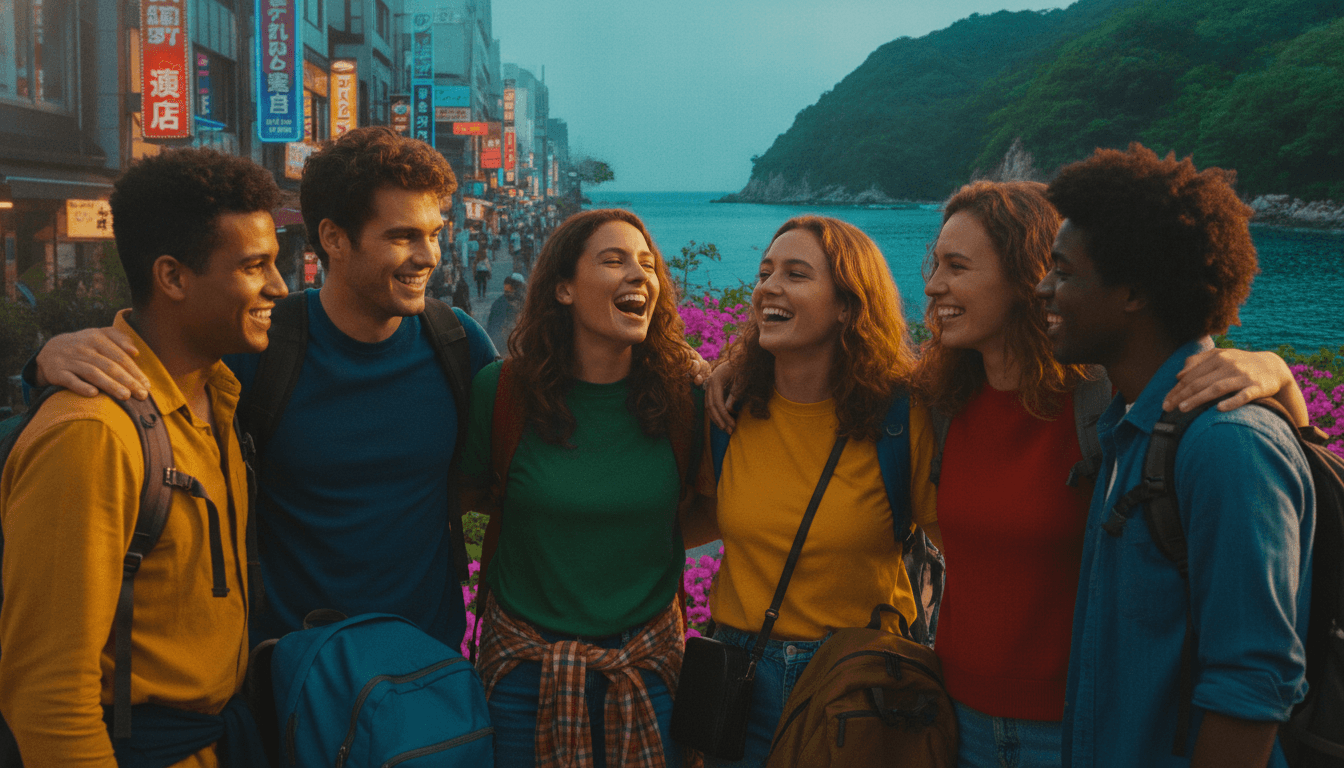
Korea & Japan Encompassed — Self-Launched (Seoul to Tokyo, 16 Days)
16 days · South Korea & Japan
G Adventures charges £4,870
No-markup version: ~£1,590 per person
Estimate only, not a guaranteed price. Always verify costs independently before booking.
A self-launched, rail-first version of G Adventures' 16-day Korea & Japan loop: Seoul's palaces and markets, a Korean mountain temple stay, Gyeongju's UNESCO sights, Busan's coastline, the DMZ, then a short flight to Osaka, a night in a Koyasan temple, Hiroshima and Miyajima, Kyoto's castles and torii gates, and a finish at Mt Fuji's lakes and Tokyo. All transport is public (KTX, Shinkansen, local trains, ferries), accommodation is hostel/guesthouse/minshuku-level with two traditional temple stays kept in, and every "included" activity is replaced with a self-bookable equivalent. Costs are rough budget-traveller estimates in GBP and exclude international flights.
Day-by-day
Arrive Seoul — settle in Myeongdong / Insadong
Seoul, South Korea
Land at Incheon and take the AREX all-stop train (~£4) or limousine bus (~£9) into the city. Check into a guesthouse or hostel in Myeongdong, Insadong or Hongdae (~£16-22/night dorm or simple double). Pick up a T-money card at a convenience store and load ~£15. No fixed plans — wander Insadong's tea shops and eat your first Korean BBQ or street tteokbokki. Sort your Japan eSIM and, if you're doing Koyasan, confirm your temple booking tonight.
🚌AREX airport train ~£4; local metro ~£1.20/ride
🛏Guesthouse/hostel, Seoul (Myeongdong or Insadong)
- →Insadong evening wander
- →T-money card setup
- →Street food dinner at Gwangjang or Myeongdong
Seoul highlights on foot — palaces, hanok village, markets
Seoul
Do the guided city tour yourself with a metro day-pass (~£4.50). Start early at Gyeongbokgung Palace (£2 entry, or free if you wear hanbok — hanbok rental ~£12 for 2hrs) and catch the royal guard-changing ceremony around 10am. Walk to the National Folk Museum (free, inside the palace grounds), then Bukchon Hanok Village (free — be quiet, people live there) and Insadong. Afternoon: Jogyesa Temple, then Gwangjang Market for bindaetteok and mayak gimbap (~£6). Optional evening: N Seoul Tower cable car + observation deck ~£14, or the free Banpo Bridge Rainbow Fountain show in season.
🚌Metro day pass ~£4.50
🛏Guesthouse/hostel, Seoul
- →Gyeongbokgung Palace + guard change
- →National Folk Museum
- →Bukchon Hanok Village
- →Insadong
- →Gwangjang Market food crawl
- →Optional N Seoul Tower
KTX to Gyeongju + overnight temple stay
Gyeongju
Ride the KTX from Seoul to Singyeongju (~2h 15m, ~£32-38 booked ahead on Korail) then a local bus 700 into Gyeongju. Book a templestay direct with the Korean Templestay programme (eng.templestay.com) — Golgulsa near Gyeongju is the classic for sunmudo martial arts, from ~£45-60 including dinner, breakfast and programme. Expect temple etiquette briefing, evening chanting, a monk martial-arts demonstration and a simple vegetarian dinner with shared facilities. Pack a small overnight bag and leave your main bag in a Gyeongju locker or guesthouse.
🚌KTX Seoul–Singyeongju ~£35; local bus ~£1.50
🛏Mountain temple stay, shared facilities (Golgulsa or similar)
- →Templestay programme
- →Temple etiquette briefing
- →Sunmudo martial arts demonstration
- →Evening prayer ritual
Dawn meditation, Bulguksa, Yangdong & royal tombs — to Busan
Gyeongju → Busan
Wake for the 4-5am drum and bell ritual and morning meditation, then breakfast at the temple. Head into Gyeongju: bus 10/11 to Bulguksa Temple (~£3 entry) — the Dabotap and Seokgatap pagodas and the gilt-bronze Buddhas. Then bus to Yangdong Folk Village (~£2 entry) for a 500-year-old Joseon clan village. Finish at Cheomseongdae Observatory and the Daereungwon royal tombs (both cheap/free, lovely at golden hour). Evening: intercity bus or train Gyeongju–Busan (~1h, ~£4-7). Check into a hostel in Haeundae or Seomyeon (~£16).
🚌Local buses ~£3; Gyeongju–Busan bus/train ~£5
🛏Hostel/guesthouse, Busan
- →Temple morning ritual
- →Bulguksa Temple (UNESCO)
- →Yangdong Folk Village (UNESCO)
- →Cheomseongdae Observatory & royal tombs
Busan — seaside temple, Gamcheon, fish markets
Busan
Self-guided Busan day on the metro (~£4.50 day pass). Bus 181 to Haedong Yonggungsa, the 14th-century temple perched on the rocks — go early, it gets busy. Back west to Gamcheon Culture Village for the painted hillside lanes (free), then Jagalchi fish market and Gukje (international) market for lunch — pick a fish tank upstairs and eat it sliced downstairs, ~£8-12. Sunset from Yongdusan Park and the Busan Tower area. Evening options: Haeundae's coastal train/monorail (~£6) or the Busan night yacht (~£18-25) — book the yacht same-day online or at the pier.
🚌Metro day pass + local buses ~£5
🛏Hostel/guesthouse, Busan
- →Haedong Yonggungsa Temple
- →Gamcheon Culture Village
- →Jagalchi & Gukje markets
- →Yongdusan Park
- →Optional night yacht or coastal train
Haeundae Beach & Dongbaekseom, then KTX back to Seoul
Busan → Seoul
Morning swim or walk at Haeundae Beach and the Dongbaekseom coastal path past APEC House (free, ~1hr loop). Grab lunch, then KTX Busan–Seoul (~2h 30m, ~£38-45). Check back into a Seoul hostel, then hit Namdaemun Market for cheap eats and souvenirs, and ride the Namsan cable car (~£8 return) up to N Seoul Tower for sunset. Optional evening: Banpo Bridge fountain, the floating islands (Sebitseom), or a wander through Gangnam.
🚌KTX Busan–Seoul ~£40; metro ~£3; Namsan cable car ~£8
🛏Hostel/guesthouse, Seoul
- →Haeundae Beach & Dongbaekseom Island
- →Namdaemun Market
- →N Seoul Tower via cable car
- →Optional Banpo Bridge fountain
DMZ day trip + War Memorial of Korea
Seoul
Book a DMZ half-day tour through Klook or GetYourGuide (~£40-55 including coach, Dora Observatory, Dorasan Station and the 3rd Tunnel; note the JSA often requires a separate official UN tour booked weeks ahead). It's the cheapest practical way in — independent access isn't permitted. Afternoon back in Seoul: the War Memorial of Korea (free, allow 2hrs) and a walk through Itaewon or a kimchi-making class (~£25-35) if you have energy. Evening at a jjimjilbang (Korean spa, ~£10-15) is the perfect recovery.
🚌Included in DMZ tour; metro ~£3
🛏Hostel/guesthouse, Seoul
- →DMZ tour (Klook/GetYourGuide)
- →War Memorial of Korea (free)
- →Optional kimchi & hanbok class
- →Optional jjimjilbang
Fly Seoul → Osaka
Seoul → Osaka, Japan
Fly Incheon/Gimpo to Kansai on a budget carrier (Peach, Jeju Air or Jin Air — book 4-8 weeks out for £45-90 one-way; add a checked bag). From Kansai Airport take the Nankai Rapi:t or express train into Namba (~£7-10). Check into a hostel or capsule hotel in Namba/Shinsekai (~£20-28). Afternoon: Shinsekai's kushikatsu (deep-fried skewers, ~£8) and a wander through Dotonbori after dark. Stock up on an IC card (ICOCA/Suica) — you'll use it for everything in Japan.
🚌Flight Seoul–Osaka ~£65 + bag; airport train ~£8
🛏Hostel/capsule hotel, Osaka (Namba or Shinsekai)
- →Shinsekai & Tsutenkaku area
- →Dotonbori evening
- →ICOCA card setup
Osaka to Mt Koya — temple stay on the mountain
Koyasan
Take the Nankai Koya Line from Namba to Gokurakubashi (~1h 45m, ~£8-10), then the funicular and bus up to Koyasan (~800m). Buy a Koyasan World Heritage Ticket (~£15) which covers the round trip plus local buses. Book a temple stay (shukubo) directly — Eko-in, Henjoko-in or similar run ~£80-130 per person half-board, so a shared/cheaper temple brings it closer to £60-80. Afternoon: Okunoin cemetery walk among cedars and lanterns, and Kongobuji temple's rock garden (~£6). Dinner is shojin ryori — Buddhist vegetarian cuisine served in your room.
🚌Nankai line + funicular + bus ~£18
🛏Temple lodging (shukubo), Koyasan — shared baths
- →Okunoin cemetery walk
- →Kongobuji Temple rock garden
- →Shojin ryori dinner
- →Optional evening meditation session
Morning prayers, then Koyasan → Hiroshima
Koyasan → Hiroshima
Join the 6:30am morning prayers (usually open to guests) and eat a traditional vegetarian breakfast. Spend the morning at the Reihokan Museum or Danjo Garan complex (some free, some ~£4). Then head down the mountain: bus + funicular + Nankai to Shin-Osaka, and Shinkansen to Hiroshima (~1h 25m from Shin-Osaka, ~£60-70, or ~£80 from Osaka). Check into a hostel near Hiroshima Peace Park or the station (~£20). Evening: okonomiyaki at Okonomi-mura — Hiroshima-style, ~£7-9.
🚌Local mountain transport ~£10; Shinkansen to Hiroshima ~£65
🛏Hostel/guesthouse, Hiroshima
- →Morning temple prayers
- →Danjo Garan & Reihokan Museum
- →Hiroshima-style okonomiyaki dinner
Peace Park & Museum + Miyajima Island
Hiroshima
Start at the Peace Memorial Park and Museum (~£1.10 museum entry, ground floor free) plus the A-Bomb Dome — allow 2-3 hours, it's sobering. After lunch, take the JR Sanyo line to Miyajimaguchi (~30min, covered by an IC card, ~£3) and the JR ferry across to Miyajima (~£2.50 each way, or free with a JR Pass). See the floating Torii Gate of Itsukushima Shrine (shrine entry ~£2; check tide tables — high tide for the floating look). Optional: hike or cable car up Mt Misen (~£11 cable car, or free on foot, 1.5-2hrs up) for views over the Seto Inland Sea. Ferries back in the evening.
🚌JR train + ferry ~£9
🛏Hostel/guesthouse, Hiroshima
- →Hiroshima Peace Park & Memorial Museum
- →Miyajima Island & Itsukushima floating torii
- →Optional Mt Misen hike or cable car
To Kyoto — Nijo Castle & Gion at dusk
Kyoto
Shinkansen Hiroshima to Kyoto (~1h 40m, ~£70) or the cheaper but slow local/express routes if you're really saving. Check into a hostel or guesthouse in Kawaramachi or near Kyoto Station (~£22-28). Afternoon: Nijo Castle and its nightingale floors and gardens (~£8). Then walk Gion — Hanamikoji Street, Shirakawa canal, Yasaka Shrine — at dusk when the lanterns come on. Free Gion walking maps are at the tourist office; paid geisha-district walking tours run ~£15-25 on GetYourGuide if you want the context. Eat at Nishiki Market before it closes (~6pm).
🚌Shinkansen ~£70; local buses ~£1.20/ride
🛏Hostel/guesthouse, Kyoto
- →Nijo Castle & gardens
- →Gion geisha district walk
- →Yasaka Shrine
- →Nishiki Market
Fushimi Inari at dawn, Arashiyama, ryokan night
Kyoto
Beat the crowds: JR Nara line to Inari at 6:30am and walk the lower torii tunnels of Fushimi Inari Taisha (free) — by 9am it's rammed. Back into town for the Zen rock garden at Ryoan-ji (~£3.50) or Kinkaku-ji (~£2.50). Afternoon: Arashiyama bamboo grove, Tenryu-ji garden (~£4) and the Togetsukyo bridge. Tonight, swap the hostel for a traditional ryokan or minshuku — a shared-bath minshuku runs ~£45-70 with breakfast, a full ryokan ~£100+. Futons, tatami, yukata, onsen bath. Book on Rakuten Travel or Booking.com a few weeks ahead.
🚌JR + local trains/buses ~£7
🛏Ryokan/minshuku, Kyoto (shared bath)
- →Fushimi Inari Taisha at dawn
- →Ryoan-ji or Kinkaku-ji
- →Arashiyama bamboo grove & Tenryu-ji
- →Ryokan onsen evening
Kyoto → Hakone — Lake Ashi & Mt Fuji views
Hakone
Shinkansen Kyoto to Odawara (~2h, ~£65), then the Hakone Tozan line and bus to your guesthouse in Gora or Sengokuhara (~£25-35/night, or a hostel dorm in Yumoto for ~£20). Buy the Hakone Free Pass (~£35-40, 2 days) covering the loop: Hakone Ropeway over Owakudani's sulphur vents, the pirate ship across Lake Ashinoko (included), and the Tozan railway. Clear-day Fuji views from the lake's north shore — go late afternoon. Finish with a bathhouse soak (Tenzan Onsen, ~£5).
🚌Shinkansen ~£65; Hakone Free Pass ~£38
🛏Guesthouse/hostel, Hakone
- →Hakone ropeway & Owakudani
- →Lake Ashinoko boat
- →Mt Fuji viewpoints
- →Onsen soak
Hakone → Tokyo — Meiji Shrine, Shibuya, Asakusa
Tokyo
Morning at the Open-Air Museum or a last lake walk, then the Romancecar or regular train to Shinjuku (~1h 45m, ~£15). Check into a hostel in Asakusa, Shibuya or Shinjuku (~£22-30). Afternoon: Harajuku's Takeshita Street and the Meiji Jingu shrine forest walk (free, inner garden ~£3). Evening: Shibuya Crossing and the Sky observation decks, or Senso-ji in Asakusa if you're staying east. Dinner at an izakaya or a standing sushi bar (~£10-15).
🚌Train to Tokyo ~£15; metro ~£3
🛏Hostel/guesthouse, Tokyo
- →Meiji Jingu Shrine
- →Harajuku/Takeshita Street
- →Shibuya Crossing
- →Senso-ji Temple option
Tokyo — market breakfast and departure
Tokyo
Early run to Tsukiji Outer Market for tamagoyaki, uni and a ¥1,000 breakfast bowl, or the free Imperial Palace East Gardens if the market's too much. Last souvenir hunting in Ginza or Ueno's Ameyoko. Head to Narita (~£15 on the Keisei Skyliner, ~1h) or Haneda (~£5, 30min) for your flight out. If you've got a late flight, stash bags at a coin locker (~£4) and do one more neighbourhood.
🚌Airport train ~£15
🛏—
- →Tsukiji Outer Market breakfast
- →Imperial Palace East Gardens
- →Ameyoko or Ginza shopping
Self-launched vs. G Adventures
| This itinerary (self-launched) | G Adventures | |
|---|---|---|
| Price per person | ~£1,590 | £4,870 |
| Duration | 16 days | 16 days |
| Who books it | You and your group, direct | Tour operator, guided group |
| Savings | £3,280 per person (67%) | |
Estimate only, not a guaranteed price. Always verify costs independently before booking.
Want to see more G Adventures-style trips? Check them out here.~£1,590
estimated per person
You never pay Travel Crew for this — you pay hostels, transport, and activity providers directly, the same as if you'd booked it all yourself.
This publishes your dates so other travellers can find and join you — no tour operator needed.
Customise with Tour BusterCreated by

Travel Crew
0 trips
Frequently asked questions
How much does Korea & Japan Encompassed — Self-Launched (Seoul to Tokyo, 16 Days) cost?+
Doing it yourself with this self-launched itinerary costs an estimated £1,590 per person for 16 days in South Korea & Japan. This is an AI-generated estimate based on typical budget-traveller prices — actual costs will vary by season and how you book.
Is this cheaper than booking with G Adventures?+
Yes — G Adventures charges around £4,870 per person for a similar tour. Doing the same route independently, using the same standard of accommodation and activities, costs an estimated £1,590 — a saving of roughly £3,280 (67%) per person.
How long is the South Korea & Japan trip?+
This itinerary runs 16 days, covering 16 day-by-day stops through South Korea & Japan.
How do I join this trip?+
You can join an existing open departure using this itinerary if one is scheduled, or launch your own departure with your own dates and invite other travellers to join you — no tour operator required.
Isn't it easier to just use a tour operator?+
Well, yes, a tour operator will book all the individual parts of your travel for you and provide a guide. That's obvious, but doing this has the potential to save the group thousands, which can in turn improve your itinerary substantially or save you huge amounts of money. Also, when you launch a departure, Travel Crew has tools in place to help you book the individual sections of the trip or make it easier for you to do this as a group. Really, you do not need a middle man. If you are more comfortable paying more and using a middle man, then you should certainly do this.
Is it safer to book through a tour operator?+
Arguably, there isn't much difference. A self-launched trip runs on the same principle as a group travel crew: collective responsibility, everyone looking out for each other, the same way it would if a group of friends organised the trip themselves — because that's exactly what's happening. You should always take out travel insurance before you go, self-launched or not; that doesn't change either way. Every open departure is published publicly with real dates and a real trip organiser, so it's never an anonymous arrangement, and our support team is reachable any time you need help, including in an emergency while you're away. Longer-term, we're building direct relationships with ground DMCs in popular destinations, offered as an optional paid add-on for extra on-the-ground support. Ultimately, though, the group is responsible for its own conduct and safety on a self-launched trip, same as on any trip you plan yourself.
What kind of trip is this?+
This is a culture, city-breaks, foodie trip through South Korea & Japan, self-launched rather than run by a tour operator — you organise it with a group you find or bring yourself.
Would you like to name the operator, name the trip, or have any suggestions about how to improve this itinerary?
Drop your comment below — if you've done a similar route, tell us what worked, what you'd add, or what you'd skip.
No comments yet — be the first to share your take.
Sign in to leave a comment.