
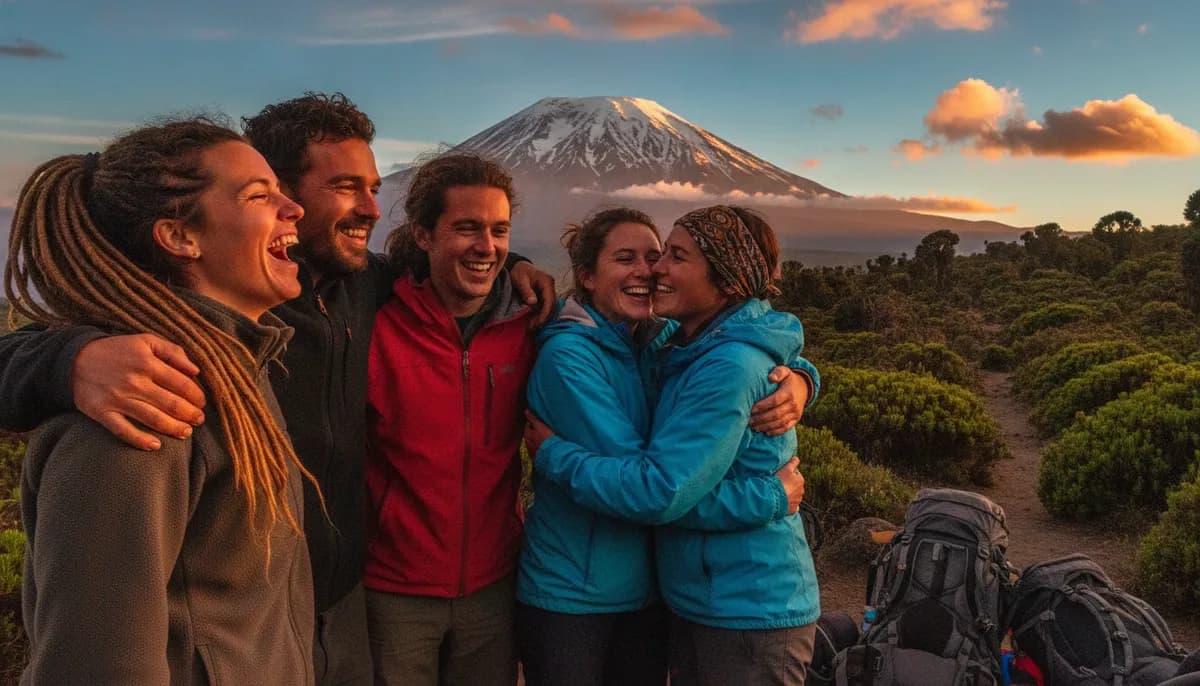
Kilimanjaro Machame Route & Serengeti Safari — Self-Launched
13 days · Tanzania
G Adventures charges £3,370
No-markup version: ~£1,915 per person
Estimate only, not a guaranteed price. Always verify costs independently before booking.
A self-launched version of the classic 13-day Tanzania combo: climb Kilimanjaro's 7-day Machame Route with a locally licensed guide crew booked direct from Moshi, then self-arrange a camping safari through Lake Manyara, the Serengeti and the Ngorongoro Crater. You book your own Kilimanjaro operator (plenty of KINAPA-licensed outfits in Moshi offer full-service camping treks from around £1,300–1,700pp) and join a small-group camping safari in Arusha (roughly £450–650pp for 5 days). Local dala-dalas, shared shuttles and a pre-arranged safari vehicle replace private tour transport. All costs are approximate and exclude international flights.
Day-by-day
Arrive Moshi — gear check and acclimatisation
Moshi
Fly into Kilimanjaro International Airport (JRO) and take a taxi or pre-arranged hotel pickup into Moshi town (~£15–20, 45 mins). Settle into a guesthouse, then spend the afternoon hiring any missing kit (down jacket, walking poles, sleeping bag ~£30–35 for the trek) from the gear shops along Chagga Street or via your trek operator. Meet your mountain guide for a briefing and weigh-in of your duffel (max 15kg). Early night — you start climbing tomorrow.
🚌Airport taxi to Moshi town, ~£15–20
🛏Moshi guesthouse or budget hotel, twin share (~£15–20pp/night)
- →Gear hire and packing check in Moshi
- →Guide briefing and permit paperwork
- →Moshi town wander and coffee-shop stop
Machame Gate to Machame Camp (2,835m)
Machame Camp
Short transfer to Machame Gate (your operator includes this). Register at the KINAPA gate, then hike 5–7 hours through rainforest to Machame Camp at 2,835m. 'Pole pole' — slowly — is the mantra. Porters set up camp and the cook prepares dinner. Drink 3+ litres of water and start the altitude routine early.
🚌Operator transfer to Machame Gate (included in trek price)
🛏Full-service alpine camping (tent, mat and pillow supplied by operator)
- →Rainforest trek to Machame Camp
- →KINAPA gate registration
- →Camp dinner and altitude briefing
Machame Camp to Shira 2 Camp (3,850m)
Shira 2 Camp
Climb out of the forest into lower alpine moorland, roughly 4–6 hours of walking to Shira 2 Camp. On a clear day Kibo Peak dominates the skyline the whole way. Your body is now above 3,500m — expect a headache and shortness of breath, and go slower than you think you need to.
🚌On foot
🛏Full-service alpine camping
- →Moorland trek to Shira 2 Camp
- →Kibo Peak viewpoints
- →Sunset over Shira Plateau
Shira 2 to Barranco via Lava Tower (4,600m) — climb high, sleep low
Barranco Camp
The key acclimatisation day: hike up to Lava Tower at 4,600m for lunch, then descend to Barranco Camp at 3,950m. Views of the Western Breach and Breach Wall are spectacular. This is where many hikers first feel altitude properly — if you feel rough, tell your guide immediately.
🚌On foot
🛏Full-service alpine camping
- →Lava Tower acclimatisation hike
- →Western Breach viewpoints
- →Descend to Barranco Camp
Barranco Wall to Karanga then Barafu Camp (4,673m)
Barafu Camp
Scramble the famous Barranco Wall (hands-and-feet but not technical) passing below the Heim Glacier, then traverse to Karanga and on to Barafu Camp. Arrive early afternoon, eat a big carb-heavy dinner and sleep by 7pm — you're woken around 11pm for the summit push.
🚌On foot
🛏Full-service alpine camping
- →Barranco Wall scramble
- →Heim Glacier views
- →Early dinner and pre-summit rest
Summit night — Uhuru Peak (5,895m) — descend to Mweka Camp
Mweka Camp
Start at midnight on the northwest scree, slow and steady past Rebmann and Ratzel glaciers to Stella Point (5,756m) for sunrise, then the final 45 minutes around the crater rim to Uhuru Peak. Take the photo, don't linger — descend to Barafu for brunch, then continue down to Mweka Camp in the forest. This is the hardest day of the trip; the descent is long and hard on the knees.
🚌On foot
🛏Full-service alpine camping
- →Night ascent to Stella Point
- →Uhuru Peak summit at sunrise
- →Long descent to Mweka Camp
Mweka Gate to Moshi — shower, beer, celebrate
Moshi
Short 3–4 hour descent through forest to Mweka Gate, sign out of the park and collect your certificate. Tip your crew here (budget £90–130pp in a group envelope — it's the main income for guides, cooks and porters). Transfer back to Moshi, take the best shower of your life, and hit a local bar for a celebratory Kilimanjaro beer.
🚌Operator transfer from Mweka Gate to Moshi (included)
🛏Moshi guesthouse or budget hotel (~£15–20pp/night)
- →Descent to Mweka Gate
- →Summit certificate collection
- →Crew tipping ceremony
- →Evening out in Moshi
Moshi to Arusha — prep for safari
Arusha
Take a local bus or shared shuttle from Moshi to Arusha (roughly 2 hours, £3–5). Check into a hostel or guesthouse, drop off your mountain gear in storage, get laundry done and meet your safari group for a briefing. Independent operators in Arusha (e.g. budget camping safari companies bookable via GetYourGuide or direct) run 5-day Serengeti/Ngorongoro trips leaving regularly.
🚌Local bus/shared shuttle Moshi–Arusha, ~£4
🛏Arusha hostel or guesthouse, twin share (~£15–20pp/night)
- →Moshi–Arusha bus ride
- →Safari group briefing
- →Laundry and town resupply
Mto wa Mbu village walk and Lake Manyara safari
Mto wa Mbu
Drive west to Mto wa Mbu at the foot of the Rift Valley escarpment. Join a locally run village walk (~£15) — banana plantations, rice paddies, a Maasai market and a traditional lunch with a local family. Afternoon game drive in Lake Manyara National Park, famous for tree-climbing lions and huge flamingo flocks. Camp at a serviced campsite with warm showers.
🚌4x4 safari vehicle with group, ~2.5 hours driving
🛏Public campsite near Lake Manyara (full-service camping, tents pitched for you)
- →Mto wa Mbu village walk and local lunch
- →Lake Manyara National Park game drive
- →Rift Valley escarpment viewpoints
Into the Serengeti — game drive en route to Seronera
Serengeti National Park
Long but rewarding drive up through the Ngorongoro highlands and into the Serengeti, game-viewing the whole way. Arrive at Seronera in the central Serengeti for afternoon wildlife spotting — lion, elephant, buffalo, giraffe and, in season, the wildebeest herds. Camp inside the park at Seronera public campsite (basic long-drop toilets, no electricity — bring a power bank).
🚌4x4 safari vehicle, ~5–6 hours driving with stops
🛏Seronera public campsite, Serengeti (full-service camping)
- →Ngorongoro highlands drive
- →En-route game drive into Serengeti
- →Seronera afternoon game drive
Full day in the Serengeti
Serengeti National Park
Up at dawn for a full day of game driving in the central Serengeti with a picnic lunch in the bush. This is your best shot at the Big Five. Optional extra: a Serengeti hot-air balloon safari (bookable direct with operators like Serengeti Balloon Safaris — expect around £450–500pp, far cheaper than the tour-operator add-on). Otherwise, sunset back at camp with a cold drink.
🚌4x4 safari vehicle, full day
🛏Seronera public campsite, Serengeti
- →Dawn full-day Serengeti game drive
- →Bush picnic lunch
- →Optional hot-air balloon safari (extra cost)
Serengeti to Ngorongoro Crater rim
Ngorongoro Crater rim
Morning game drive out of the Serengeti, then continue to the Ngorongoro Conservation Area. Camp on the crater rim (~2,300m — it gets cold, so layers). Sunset views over the caldera, then early dinner ready for a 6am descent into the crater tomorrow.
🚌4x4 safari vehicle, ~4–5 hours driving with game stops
🛏Ngorongoro Crater rim campsite (full-service camping)
- →Morning Serengeti game drive
- →Ngorongoro rim viewpoints at sunset
Ngorongoro Crater floor, Maasai village and back to Arusha
Arusha
Descend into the Ngorongoro Crater at dawn for 3–4 hours of game driving — the highest density of wildlife in Africa, with black rhino a real possibility. Stop at a Maasai village or community tourism initiative on the way out (many Arusha operators include a village stop; otherwise arrange one direct for ~£15). Return to Arusha by late afternoon. Book onward flights from 6pm, or take the daily 8am public shuttle to Nairobi the next morning.
🚌4x4 safari vehicle to Arusha, ~3 hours
🛏Not included — post-night in Arusha if needed (~£18pp)
- →Ngorongoro Crater game drive
- →Maasai village visit
- →Farewell lunch with safari group
Self-launched vs. G Adventures
| This itinerary (self-launched) | G Adventures | |
|---|---|---|
| Price per person | ~£1,915 | £3,370 |
| Duration | 13 days | 13 days |
| Who books it | You and your group, direct | Tour operator, guided group |
| Savings | £1,455 per person (43%) | |
Estimate only, not a guaranteed price. Always verify costs independently before booking.
Want to see more G Adventures-style trips? Check them out here.~£1,915
estimated per person
You never pay Travel Crew for this — you pay hostels, transport, and activity providers directly, the same as if you'd booked it all yourself.
This publishes your dates so other travellers can find and join you — no tour operator needed.
Customise with Tour BusterCreated by

Travel Crew
0 trips
Frequently asked questions
How much does Kilimanjaro Machame Route & Serengeti Safari — Self-Launched cost?+
Doing it yourself with this self-launched itinerary costs an estimated £1,915 per person for 13 days in Tanzania. This is an AI-generated estimate based on typical budget-traveller prices — actual costs will vary by season and how you book.
Is this cheaper than booking with G Adventures?+
Yes — G Adventures charges around £3,370 per person for a similar tour. Doing the same route independently, using the same standard of accommodation and activities, costs an estimated £1,915 — a saving of roughly £1,455 (43%) per person.
How long is the Tanzania trip?+
This itinerary runs 13 days, covering 13 day-by-day stops through Tanzania.
How do I join this trip?+
You can join an existing open departure using this itinerary if one is scheduled, or launch your own departure with your own dates and invite other travellers to join you — no tour operator required.
Isn't it easier to just use a tour operator?+
Well, yes, a tour operator will book all the individual parts of your travel for you and provide a guide. That's obvious, but doing this has the potential to save the group thousands, which can in turn improve your itinerary substantially or save you huge amounts of money. Also, when you launch a departure, Travel Crew has tools in place to help you book the individual sections of the trip or make it easier for you to do this as a group. Really, you do not need a middle man. If you are more comfortable paying more and using a middle man, then you should certainly do this.
Is it safer to book through a tour operator?+
Arguably, there isn't much difference. A self-launched trip runs on the same principle as a group travel crew: collective responsibility, everyone looking out for each other, the same way it would if a group of friends organised the trip themselves — because that's exactly what's happening. You should always take out travel insurance before you go, self-launched or not; that doesn't change either way. Every open departure is published publicly with real dates and a real trip organiser, so it's never an anonymous arrangement, and our support team is reachable any time you need help, including in an emergency while you're away. Longer-term, we're building direct relationships with ground DMCs in popular destinations, offered as an optional paid add-on for extra on-the-ground support. Ultimately, though, the group is responsible for its own conduct and safety on a self-launched trip, same as on any trip you plan yourself.
What kind of trip is this?+
This is a adventure, hiking, wildlife trip through Tanzania, self-launched rather than run by a tour operator — you organise it with a group you find or bring yourself.
Would you like to name the operator, name the trip, or have any suggestions about how to improve this itinerary?
Drop your comment below — if you've done a similar route, tell us what worked, what you'd add, or what you'd skip.
No comments yet — be the first to share your take.
Sign in to leave a comment.