
Self-Launched Lhasa to Everest Base Camp & Kathmandu Overland
7 days · Tibet & Nepal
Great Tibet Tour charges £965
No-markup version: ~£640 per person
Estimate only, not a guaranteed price. Always verify costs independently before booking.
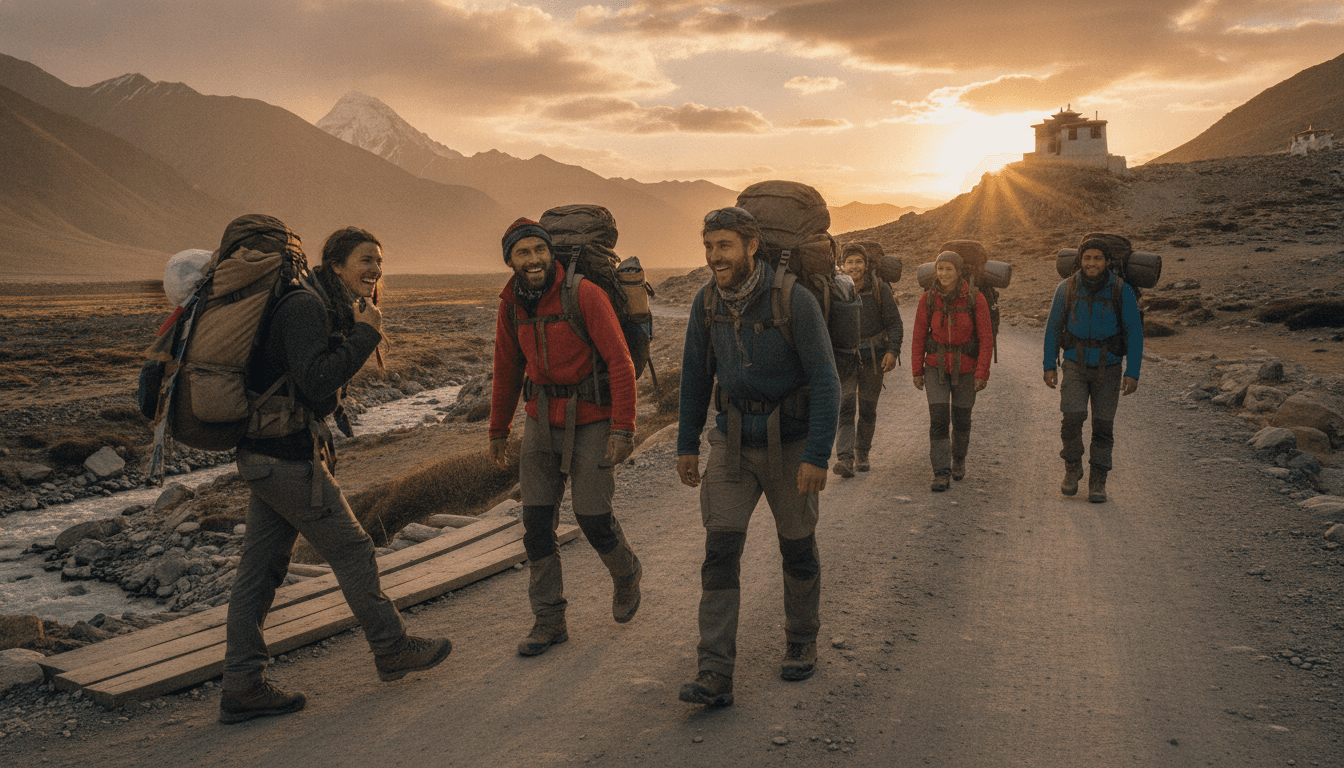
A self-launched version of the classic Lhasa–Everest Base Camp–Kathmandu overland route. Tibet cannot be done fully independently — every foreign traveller legally needs a Tibet Travel Permit plus an officially licensed guide and vehicle for the whole stay, so this plan keeps those unavoidable costs but strips out the group-tour mark-up: you book the permits/guide/vehicle through a local Tibetan agency directly, use budget guesthouses in Lhasa and Shigatse, sleep in a nomad tent or the Rongbuk guesthouse at EBC, then cross the Gyirong (Rasuwagadhi) border on public/shared transport and finish with a local bus to Kathmandu. Costs are rough backpacker estimates in GBP and exclude your flight to Lhasa and China/Nepal visa fees.
Day-by-day
Fly into Lhasa, acclimatise gently
Lhasa
Land at Lhasa Gonggar Airport (LXA) and take the airport shuttle bus (about ¥30, roughly 1 hour) into the city rather than a private transfer. Check into a budget guesthouse near Barkhor Street and do almost nothing: Tibet sits at 3,650 m, so day one is for hydration, light walks and an early night. If you flew in over the Himalayas, grab a window seat on the left. Pick up bottled water and snacks for the days ahead and confirm your guide/vehicle pickup for tomorrow. Independent travellers still need an agency-arranged licensed guide and vehicle in Tibet — book this in advance (usually via a Lhasa-based agency, 2-3 weeks ahead so the Tibet Travel Permit can be processed).
🚌Airport shuttle bus into Lhasa ~£4
🛏Budget guesthouse near Barkhor Street (dorm or simple double), ~£15
- →Airport shuttle to city
- →Gentle acclimatisation walk around Barkhor Street
- →Permit and guide logistics check
Drepung Monastery, Tibet Museum and Norbulingka
Lhasa
Hire your guide and vehicle for the day (shared cost) and start at Drepung Monastery on the western edge of the city — go early to catch the monks' morning debates and the kora (circuit) walk. Continue to the free-entry Tibet Museum for context on Tibetan history and culture, then spend the afternoon in Norbulingka, the old summer palace with its gardens and chapels. Entrance fees are modest (roughly ¥60 Drepung, ¥60 Norbulingka); the museum is free but check opening days. Dinner at a Tibetan teahouse near the old town — momos and butter tea for under £5.
🚌Shared guide vehicle / local taxi trips across the city ~£6
🛏Budget guesthouse, Lhasa, ~£15
- →Drepung Monastery
- →Tibet Museum
- →Norbulingka Palace
Potala Palace, Jokhang Temple and Barkhor kora
Lhasa
Book your Potala Palace ticket in advance — entry is timed and capped per day (about ¥200), so your agency or hotel should reserve it. Climb the 300-odd steps slowly and allow 2 hours inside. After lunch visit Jokhang Temple (¥85), the spiritual heart of Lhasa, then join locals walking the Barkhor Street kora clockwise at dusk, spinning prayer wheels and browsing stalls. This is the cultural high point of the Tibet leg — keep the evening free for rooftop views over the Potala.
🚌Walking plus short taxi hops ~£5
🛏Budget guesthouse, Lhasa, ~£15
- →Potala Palace (timed entry, book ahead)
- →Jokhang Temple
- →Barkhor Street kora at dusk
Overland to Shigatse via Yamdrok Lake and Karola Glacier
Shigatse
Leave Lhasa early with your guide and vehicle for the long drive west. Cross Kampala Pass (4,794 m) for the first big view of turquoise Yamdrok Lake, then continue over the Karola Glacier viewpoint and stop at Pelkor Chode Monastery and the Kumbum in Gyantse. Arrive in Shigatse (Samzhubzê) in the evening — Shigatse sits at 3,840 m, so keep it easy. Budget guesthouses and basic hotels around the bus station area are cheap and central; eat simple Sichuan-Tibetan noodles for dinner.
🚌Shared guide vehicle for the Lhasa–Gyantse–Shigatse leg (counted in the agency/vehicle day cost)
🛏Budget hotel/guesthouse, Shigatse, ~£16
- →Kampala Pass viewpoint
- →Yamdrok Lake
- →Karola Glacier
- →Pelkor Chode Monastery & Kumbum, Gyantse
Tashilunpo Monastery, Gawula Pass and Everest Base Camp
Everest Base Camp (Rongbuk)
Morning at Tashilunpo Monastery, seat of the Panchen Lama and Shigatse's biggest sight (about ¥80). Then the road climbs through Lhatse and over the Tsola and Gyatsola passes to Gawula Pass, where the whole Himalayan chain — including Everest — spreads out in front of you on a clear day. Enter Mt. Everest National Nature Reserve (vehicle/entry fee payable locally) and reach Everest Base Camp by late afternoon. In season (roughly April to late October) sleep in a nomad tent camp; in winter the tents close and you stay at the Rongbuk guesthouse/hotel instead. It's basic, cold and unforgettable — bring a warm sleeping bag liner, headtorch and cash.
🚌Shared guide vehicle, Shigatse–EBC
🛏Nomad tent camp at EBC (or Rongbuk guesthouse in winter), ~£18
- →Tashilunpo Monastery
- →Gawula Pass Himalayan panorama
- →Everest Base Camp sunset
- →Night at 5,150 m
Sunrise on Everest, Rongbuk Monastery, then on to Gyirong
Gyirong (Kyirong)
Set an alarm for sunrise on Everest's north face from the camp area — weather dependent but worth the cold. Visit Rongbuk Monastery, the highest monastery in the world, then head west towards the Nepali border, passing Mt. Shishapangma views and Pekutso Lake. Descend steeply into the green Gyirong valley, a dramatic change from the plateau, and overnight in Gyirong town. This is the sensible place to break the journey before crossing, and there are cheap guesthouses and Tibetan-run hotels along the main street.
🚌Shared guide vehicle, EBC–Gyirong
🛏Guesthouse in Gyirong town, ~£15
- →Everest sunrise viewpoint
- →Rongbuk Monastery
- →Shishapangma and Pekutso Lake en route
- →Gyirong valley
Cross the Gyirong border and bus to Kathmandu
Kathmandu
Take a short local ride to the Gyirong–Rasuwagadhi border, clear Chinese and Nepali immigration on foot (allow 1-2 hours; the border can close for holidays, so check in advance), then pick up a shared jeep from Rasuwagadhi to Syabrubesi or directly to Kathmandu (roughly NPR 3,000-5,000 / £20-30 per seat). Shared jeeps and buses run the ~7-9 hour route to Kathmandu; agencies also sell seats on tourist buses. Arrive in Kathmandu, take a taxi to Thamel and treat yourself to a dal bhat and a bed in a Thamel guesthouse — the city is where the trip loosens up and gets cheap again.
🚌Local ride to border + shared jeep Rasuwagadhi–Kathmandu ~£25
🛏Guesthouse in Thamel, Kathmandu, ~£12
- →Gyirong/Rasuwagadhi border crossing
- →Shared jeep through Nepal's middle hills
- →Evening in Thamel, Kathmandu
Self-launched vs. Great Tibet Tour
| This itinerary (self-launched) | Great Tibet Tour | |
|---|---|---|
| Price per person | ~£640 | £965 |
| Duration | 7 days | 7 days |
| Who books it | You and your group, direct | Tour operator, guided group |
| Savings | £325 per person (34%) | |
Estimate only, not a guaranteed price. Always verify costs independently before booking.
Want to see more Great Tibet Tour-style trips? Check them out here.~£640
estimated per person
You never pay Travel Crew for this — you pay hostels, transport, and activity providers directly, the same as if you'd booked it all yourself.
This publishes your dates so other travellers can find and join you — no tour operator needed.
Customise with Tour BusterCreated by
Travel Crew
0 trips
Frequently asked questions
How much does Self-Launched Lhasa to Everest Base Camp & Kathmandu Overland cost?+
Doing it yourself with this self-launched itinerary costs an estimated £640 per person for 7 days in Tibet & Nepal. This is an AI-generated estimate based on typical budget-traveller prices — actual costs will vary by season and how you book.
Is this cheaper than booking with Great Tibet Tour?+
Yes — Great Tibet Tour charges around £965 per person for a similar tour. Doing the same route independently, using the same standard of accommodation and activities, costs an estimated £640 — a saving of roughly £325 (34%) per person.
How long is the Tibet & Nepal trip?+
This itinerary runs 7 days, covering 7 day-by-day stops through Tibet & Nepal.
How do I join this trip?+
You can join an existing open departure using this itinerary if one is scheduled, or launch your own departure with your own dates and invite other travellers to join you — no tour operator required.
Isn't it easier to just use a tour operator?+
Well, yes, a tour operator will book all the individual parts of your travel for you and provide a guide. That's obvious, but doing this has the potential to save the group thousands, which can in turn improve your itinerary substantially or save you huge amounts of money. Also, when you launch a departure, Travel Crew has tools in place to help you book the individual sections of the trip or make it easier for you to do this as a group. Really, you do not need a middle man. If you are more comfortable paying more and using a middle man, then you should certainly do this.
Is it safer to book through a tour operator?+
Arguably, there isn't much difference. A self-launched trip runs on the same principle as a group travel crew: collective responsibility, everyone looking out for each other, the same way it would if a group of friends organised the trip themselves — because that's exactly what's happening. You should always take out travel insurance before you go, self-launched or not; that doesn't change either way. Every open departure is published publicly with real dates and a real trip organiser, so it's never an anonymous arrangement, and our support team is reachable any time you need help, including in an emergency while you're away. Longer-term, we're building direct relationships with ground DMCs in popular destinations, offered as an optional paid add-on for extra on-the-ground support. Ultimately, though, the group is responsible for its own conduct and safety on a self-launched trip, same as on any trip you plan yourself.
What kind of trip is this?+
This is a adventure, culture, hiking trip through Tibet & Nepal, self-launched rather than run by a tour operator — you organise it with a group you find or bring yourself.
Would you like to name the operator, name the trip, or have any suggestions about how to improve this itinerary?
Drop your comment below — if you've done a similar route, tell us what worked, what you'd add, or what you'd skip.
No comments yet — be the first to share your take.
Sign in to leave a comment.